
The Modern Trap
Stop expecting Door Dash to cure anxiety.

Our brains are built for the savanna, not the sofa.
In Your Happier Life Toolbox, Billy explains that our brains are threat-detection machines.
They evolved to find danger to keep us alive, not so much to find joy. (well, that kind of stinks)
We are wired for survival. .
We live in a world of extreme convenience where everything from dinner to entertainment is a click away.
We can Door Dash food and binge-watch series until we are numb.
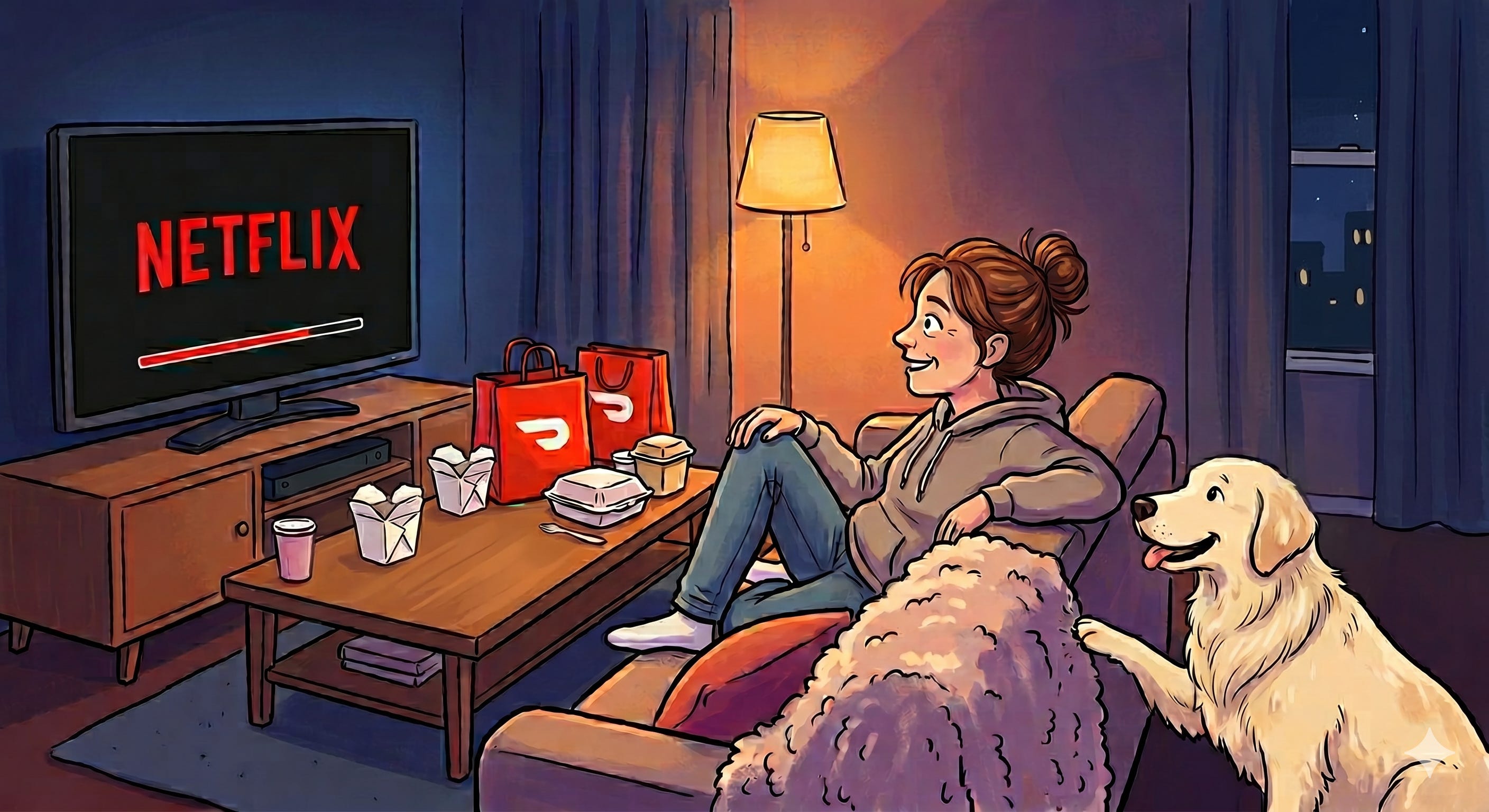
Our urban environments and digital noise demand what scientists call “directed attention”.
This is a limited mental resource.
It gets depleted as we force ourselves to focus and ignore distractions.
It’s like running our phones with too many apps open.
Battery drains are inevitable.
We have traded real presence for cheap comforts.
We chase “happy” as a final destination, but that is a trap.
Becoming happier is a journey that requires intentional effort.
What I believed before:
I thought my worrying was a personality flaw.
I believed that once I achieved enough “comfort” the right house, remote work, and the ability to avoid every minor struggle I would finally feel peaceful.
I treated my anxiety like a fire that needed to be extinguished with more modern conveniences.
What broke that belief?
The messy truth is that convenience didn’t make me calmer; it was making me more reactive.
I realized that my “survival wiring” was cataloging every minor annoyance, like the late delivery guy or a buffering screen in the middle of a great episode, as a genuine threat.
I was stuck in a low-grade stress response all day because I was using modern comforts to take me away from the very thing my brain was designed to handle. Survive and thrive.
What I believe now:
I believe that we cannot find comfort by avoiding effort.
Billy notes that “your brain is a prediction machine”.
If I feed it nothing but instant gratification, it becomes hyper-sensitive to any kind of delay.
I now believe that happiness requires “software upgrades” like gratitude to override our default survival settings.
Who does this help?
This helps anyone over 40 who feels like they have “everything” but still wakes up with a heavy chest.
It is for the person who feels guilty for being stressed despite a life of modern convenience.
What this reveals about approaching problems today.
Approaching problems today requires recognizing that “happiness isn’t determined by what happens to us, but by how we talk to ourselves about it”.
Instead of chasing the next comfort, we should try tools like labeling emotions or reframing negativity to “downgrade threats to challenges”.
Sort of like me saying I do not have 100 subscribers “yet” when I add yet it pulls me away from a negative thought pattern that keeps me stuck and possibly losing sight of why I would like 100 subscribers.
These approaches help me stay aligned and not just seeking instant gratification here as well as in my day to day.
Just because the world is hustling doesn’t mean it is good for our brain.
What might be better for our brains is a good old fashion stretching.
Doing something that is a little more difficult we thought maybe we couldn’t do.
What is one thing lately you have been thinking about doing but are a bit challenged by or admittedly afraid of?
I’ll go first. Mine is pickle ball. My husband has wanted to play for 3 years now, and I have been dragging my feet. Why because I know it will take some brain power plus physical work.
I am not good with numbers, and I am afraid I will not be able to remember to call out the things in the right order that I have to when serving.
Sounds silly right? I know!!!
But somehow my brain is seeing this as a threat and not as something I could be doing to stay in shape, have fun, and meet new people.
I’ll let you know if I make it to a court anytime soon.
Thanks for reading,
Suzy
This really resonated. The idea that convenience can actually make us more reactive instead of calmer is such an important shift in perspective. It’s easy to assume removing friction should make things better, but you captured how it can heighten sensitivity instead.
I also appreciated how you grounded this in your own experience it made the insight feel tangible and relatable. The pickleball example was a perfect illustration of how our brains can mislabel effort as threat.
Curious to see if you make it to the court. I have a feeling you will. Monica
Me fkn door dashing while I read this… ugh. Yes to needing to read this!!